If you are tired of expensive volunteer programs but want to make a positive contribution in the world, look no further! Global Crossroad is dedicated to offering high quality, well-organized and meaningful programs at the most affordable price in the United States. We work hard to keep costs as low as possible, focusing on the effectiveness of our projects, the safety of our volunteers and the quality of participant experiences. We currently offer the most competitive price possible in today's market including an application fee (of $299) AND a small weekly fee as follows:
Volunteer Programs in Costa Rica
Teaching English in Rural School (San Jose, Puntarenas, Guanacaste)
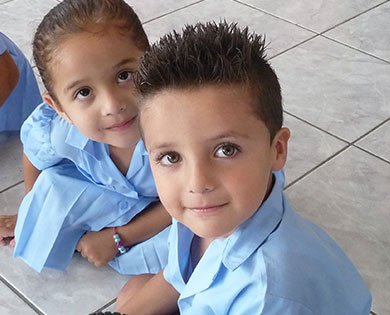
Volunteer in Costa Rica teaching English to improve educational environments and expand future opportunities for local children! Poor, rural children are falling behind because schools are too small, poorly constructed and there’s a lack of qualified teachers to provide students with well-rounded and high-quality educations. Global Crossroad Volunteer’s volunteer/travel teaching English project in Costa Rica offers volunteers with ample opportunity to explore the daily life of Costa Rica while helping young students improve their English skills. Volunteers working in the English-teaching project can make a meaningful contribution in the lives of rural children, helping them attain a better future as well as compete and participate in the global market.
The project is not available in December and January as school will remain closed in Costa Rica. During the 2 weeks holidays in July, the school will offer extra classes and other activities where our volunteers can participate.
Project/Volunteer's Life
Volunteers teaching English in Costa Rica will be based in San Miguel De Sarapiqu. As a volunteer in the teaching English in Costs Rica project, you will be assisting with classes at the kindergarten, elementary school or high school level. Volunteer duties may vary depending on individual skills and interests. Examples of activities may include:
- Teaching basic English to the children
- Teaching other subjects such as math or science
- Playing with the children
- Organizing extracurricular activities such as music, dancing, sports, art, games, etc.
- Teaching life skills such as painting, sewing, cooking, etc
- Promoting nutrition and health
- Helping to fundraise for schools
- Working with local teachers on curriculum development
- Assisting school administrations with daily tasks
- Helping with basic maintenance of schools
- Aiding local school staff in any way possible
Skills and Qualification
There are no specific qualifications needed to volunteer teaching English in Costa Rica. While Spanish is preferred, it is not required. If your Spanish skills are poor, we suggest enrolling in our Spanish Language Program to make your experience more beneficial both for you and for those you help. All volunteers are encouraged to be flexible, patient and adaptive as well as possess a "can-do" attitude.
Work in Orphanage in Costa Rica (San Jose, Puntarenas)
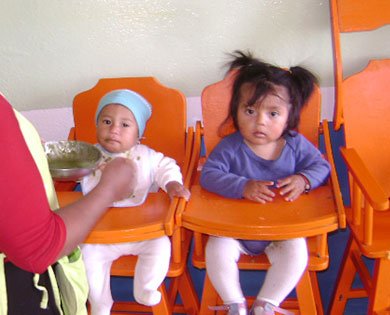
In Costa Rica , poverty is rampant and the Costa Rican government does not have the resources to provide sufficient support to local orphanages. Infants and children are abandoned by parents who cannot properly care for them or government officials have removed neglected children from their homes. Our volunteers work with local orphanages run by nuns to provide food, education and care for these poor children. Working in the orphanage project is a great way to improve the quality of life and give hope to orphans in Costa Rica. You will find the community to be very appreciative of your efforts to bring a better future for these children.
Project/Volunteer's Life
Working in orphanage in Costa Rica volunteers will work with the orphanage staff to give love, food and education to local orphans. Some of the projects there include assisting with supervision of the children, playing games, helping with homework and teaching English. Volunteers may be expected to help with daily chores such as laundry, cleaning and property maintenance. You may also be asked to help the orphanage with administrative duties including fundraising. This is a great project for volunteers who enjoy working with children.
Skills and Qualification
There are no specific qualifications for this volunteer project. While knowing basic Spanish is helpful, it is not required. If you do not speak Spanish, you may enroll in our Spanish language course to make the most of your stay. As a volunteer, you must be flexible, patient and enjoy working with children.
Teaching Math and Science and Physical Education (San Jose, Puntarenas)
Volunteer in Costa Rica and teach a variety of subjects such as math, science and physical education to improve educational opportunities for local children! Volunteers help poor, rural children receive the well-rounded and high quality education they deserve. Many schools lack qualified teachers and educational resources. Global Crossroad Volunteer’s volunteer/travel teaching project in Costa Rica offers volunteers a chance to gain teaching experience, help others and explore the beautiful Costa Rica. As volunteers enhance educational environments and improve the quality of classes, students will have greater opportunities and brighter futures.
Project/Volunteer's Life
Volunteers teaching math, science and physical education in Costa Rica work in San Miguel De Sarapiqu. As a volunteer teaching English in Costs Rica, you will be assisting with classes at the kindergarten, elementary school or high school level. Volunteer duties may vary depending on individual skills and interests. Examples of activities may include:
- Teaching math, science and physical education
- Teaching other subjects such as English and health
- Work with teachers and use creativity to plan educational, interactive activities such as quizzes, experiments, field trips, crafts, etc.
- Playing with the children
- Teaching students about teamwork
- Organizing extracurricular activities such as music, dancing, sports, art, games, etc.
- Teaching life skills such as painting, sewing, cooking, etc
- Promoting nutrition and health
- Helping to fundraise for schools
- Working with local teachers on curriculum development
- Assisting school administrations with daily tasks
- Helping with basic maintenance of schools
- Aiding local school staff in any way possible
Skills and Qualification
There are no specific qualifications needed to join this volunteer project. While Spanish is preferred, it is not required. If your Spanish skills are poor, we suggest enrolling in our Spanish Language Program to make your experience more beneficial both for you and for those you help. All volunteers are encouraged to be flexible, patient and adaptive as well as possess a "can-do" attitude.
Marine Life Project (Puntarenas)
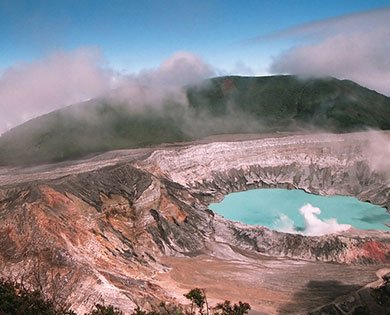
Despite being a tiny country with only a quarter of a percent of the world's landmass, Costa Rica actually has 5 percent of the world's bio-diversity. Nearly a quarter of that includes protected national parks, so needless to say, Costa Rica is a flora and fauna lover's dream. Our volunteers work with local park authorities to provide care and protection of the valuable marine life in Costa Rica, to keep this Latin American country a center of biological diversity. Working at the Marine Life Project is a great opportunity to help the environment, as well as a chance to interact directly with marine life such as sharks, crocodiles, turtles, pelicans and more.
Project/Volunteer's Life
Marine Life in Costa Rica volunteers will provide care and protection to a wide variety of marine life species. You can choose from several popular tracks within the Marine Life program:
- Marine Life Education – In this project, volunteers help with educational workshops on sharks and whales, turtles (terrestrial and oceanic), marine food chains, water pollution and waste recycling.
- Marine Life Maintenance – In this project, volunteers assist capturing animals (selection and transportation), acclimation and quarantine, incubation, breeding, nursery and maintenance.
- Marine Life Conservation – In this project, volunteers help rehabilitate and rescue marine animals with the goal of a future release back into their natural environment.
This is a great project for volunteers who enjoy being outside and working with animals.
Skills and Qualification
There are no specific qualifications for this volunteer project. While knowing basic Spanish is helpful, it is not required. As a volunteer, you must also be patient, resourceful and always respect the local culture and customs. These are traits of a very good volunteer.
Construction Project in Costa Rica (San Jose)
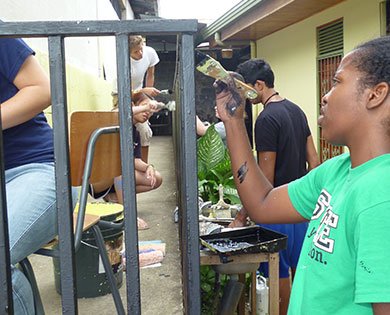
European-inspired architecture and beautiful nature reserves are what draw tourists Costa Rica. But these visitors do not see the other side of life there - the poor communities that struggle to make it. People who live in these communities live in rundown shacks that barely offer protection from the elements. Our volunteers work with professional foremen, architects and engineers to give these communities homes, schools and orphanages. Working at the Construction Project is a great way to give back to the Costa Rican people. You will find the local citizens to be very appreciative and thrilled by your positive effect on their lives.
Project/Volunteer's Life
Construction in Costa Rica volunteers will work to build, mix, clean, paint, cut and install to improve homes, schools and orphanages. The people living there are poor and would benefit greatly from having this type of help. You can provide support to the local community in a fun and active way.
Besides repairing and building new homes and schools for orphaned children or for rural villages, you will participate in other construction projects. Some include digging, removing dirt, carrying bricks, mixing cement, plastering, painting, cleaning and various other needs related to construction. This is a great project for volunteers who enjoy being outside.
Skills and Qualification
There are no specific qualifications for this volunteer project, but the work is very physically demanding. While knowing basic Spanish is helpful, it is not required. As a volunteer, you must also exhibit initiative, be resourceful and always respect the local culture and customs. These are traits of a very good volunteer.
Medical Project in Costa Rica (Puntarenas, San Jose, Guanacaste)
The city of Puntarenas was hit with a large earthquake recently, and the main hospital there was destroyed. In a country that already had many citizens with no access to healthcare, this is a critical problem. Many Costa Ricans already suffer from both treatable and preventable diseases, so the earthquake was a devastating blow to the community. Our volunteers work with local doctors and healthcare facilities to provide medical treatments to local citizens. Working at the Medical Project in Costa Rica is a great way to give back to the people of Puntarenas and allow them to be healthy enough to rebuild their community. The people there are very appreciative of our volunteers and they will be very warm and welcoming.
Project/Volunteer's Life
Medical in Costa Rica volunteers will assist local doctors and clinics with a wide variety of duties, depending on their own medical backgrounds and experience. Some projects may include working in physical therapy, with the mentally disabled, in laboratories, dental practices, retirement homes, ambulatory services and public daycares. Some volunteers will help the Red Cross, shadow nurses or help ministry health groups with projects like dengue prevention. There are very few available healthcare resources there, and local doctors and nurses cannot handle all the additional work from the earthquake.
You can provide support to the local community in a truly helpful way. If you have basic Spanish skills and a medical background, you may participate in home visits to rural areas or conduct general patient examinations. This is a great project for volunteers with medical backgrounds or interest.
Skills and Qualification
For this project, you must have a healthcare certification, such as a medical student ID, EMT or Paramedic certification, or nursing or physician's credentials. The Costa Rican hospital will require your valid documentation before your arrival to the project. While knowing basic Spanish is helpful, it is not required. As a volunteer, you must also exhibit initiative, be resourceful and always respect the local culture and customs. These are traits of a very good volunteer.
Turtle Conservation Project (Osa Peninsula)
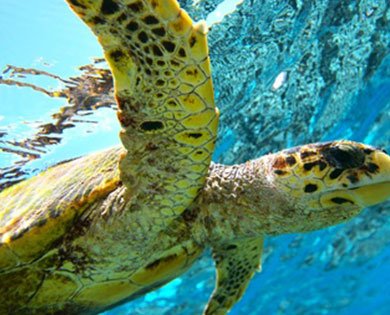
The natural habitat of turtles in Costa Rica is in danger and Global Crossroad Volunteer needs your help to protect it! Urban sprawl and farming is taking over land that used to belong to turtles, leaving the species threatened. Conservation efforts focus on strengthening turtle populations by protecting them, supporting their breeding efforts and conducting research on their health, migration pattern and recording their behavior.
The Sea Turtle Conservation project also aims to protect the nests from human poachers and from threats created by recent beach erosion. Volunteers also might work with the local community associations to implement turtle management strategies imposed by Costa Rica's Environment Ministry. Volunteers will learn about the ecology and conservation of sea turtles. They experience the life of a volunteer field worker, taking an active role in cleaning the beach, helping to collect data, as well as rehabilitating the sick and injured turtles. Located in Osa Peninsula, the project is close to Corcovado National Park, one of the few remaining sizeable areas of lowland rainforest in the world. The Park also has plenty of wild animals.
Project/Volunteer's Life
Volunteers will have 3 types of responsibilities which they will do depending on the time of the day and the season.
Your beach patrol work will include:
- Working 4 hours shifts to patrol the beach at night in a group
- Collecting eggs and transfer them to hatchery
- Taking measurement of turtles while they are laying eggs without disturbing them
- In the hatchery, volunteers will:
- Work 6 hours shifts
- Monitor temperature and rain gauge
- Help the hatchings without touching them but removing sand
- Release them into the ocean
Your work in the rescue center will include:
- Feeding turtles
- Changing water in the water tank
- Learn about conducing health assessment of turtles and doing it
Twice a week volunteers will also comb the beach looking for debris dumped from Pacaure River and other garbage left by humans. A clean, pollution free beach will attract lots of turtles to lay eggs on the beach.
Skills and Qualification
You must be 18 or above and must understand basic Spanish to volunteer. The project accepts underage volunteers if you produce written permission from your parents. You must also have insurance.
The project is outdoors and located in a rural area. Volunteers must be in physically fit, must tolerate heat and wet weather and must not mind mosquitoes and other creatures. The project won’t tolerate any consumption of illegal drugs or alcohol. We prefer non-smokers but you can volunteer if you promise to smoke only in open areas and not while working.
Meals/Accommodations
Global Crossroad Volunteer arranges volunteer meals, accommodations and strong field support for the duration of projects and optional travel packages. In Costa Rica, volunteers generally stay with host families and accommodations are in simple and clean homes in safe neighborhoods. Volunteers usually have a private bedroom, but occasionally rooms will be shared with a same-gender volunteer. Our host families are well screened and are respected members of their communities who live in affluent neighborhoods. Most of our host families have experience with hosting international volunteers. A host family stay is a great way for volunteers to improve their Spanish skills. The experience provides a unique chance for cultural immersion and exchange.
Volunteers receive three local meals per day (breakfast, lunch and dinner). We can provide vegetarian meal options, but needs must be detailed in the volunteer's application. Snacks and beverages outside of mealtimes are not provided; however, there are local restaurants and grocery stores near the residences in which we place volunteers.
Global Crossroad offers unparalleled field support to volunteers to ensure a safe and rewarding experience. Once in Costa Rica, there are many layers of support for volunteers. The most important support comes from our country coordinator/field staff. The secondary support comes from the host project staff and members of host families. Volunteers will have access to our country coordinator's mobile number and they are available 24/7. Throughout the volunteer project, our local staff stays in contact with volunteers either with face-to-face visits or via email/telephone. Our field staff will visit regularly (every 2-4 weeks) to make sure things are going well and as planned. However, if placement is far from our local offices, staff members will stay in touch via email/ phone. Volunteers are also welcome to stop in the offices at any time.
Specific details regarding accommodations, food and contact details for our local coordinator will be provided in personalized volunteer placement documentation prior to arrival.